

Spirit's demise: sad and inevitable
Today's listening: "Spirit in the Sky" by Norman Greenbaum

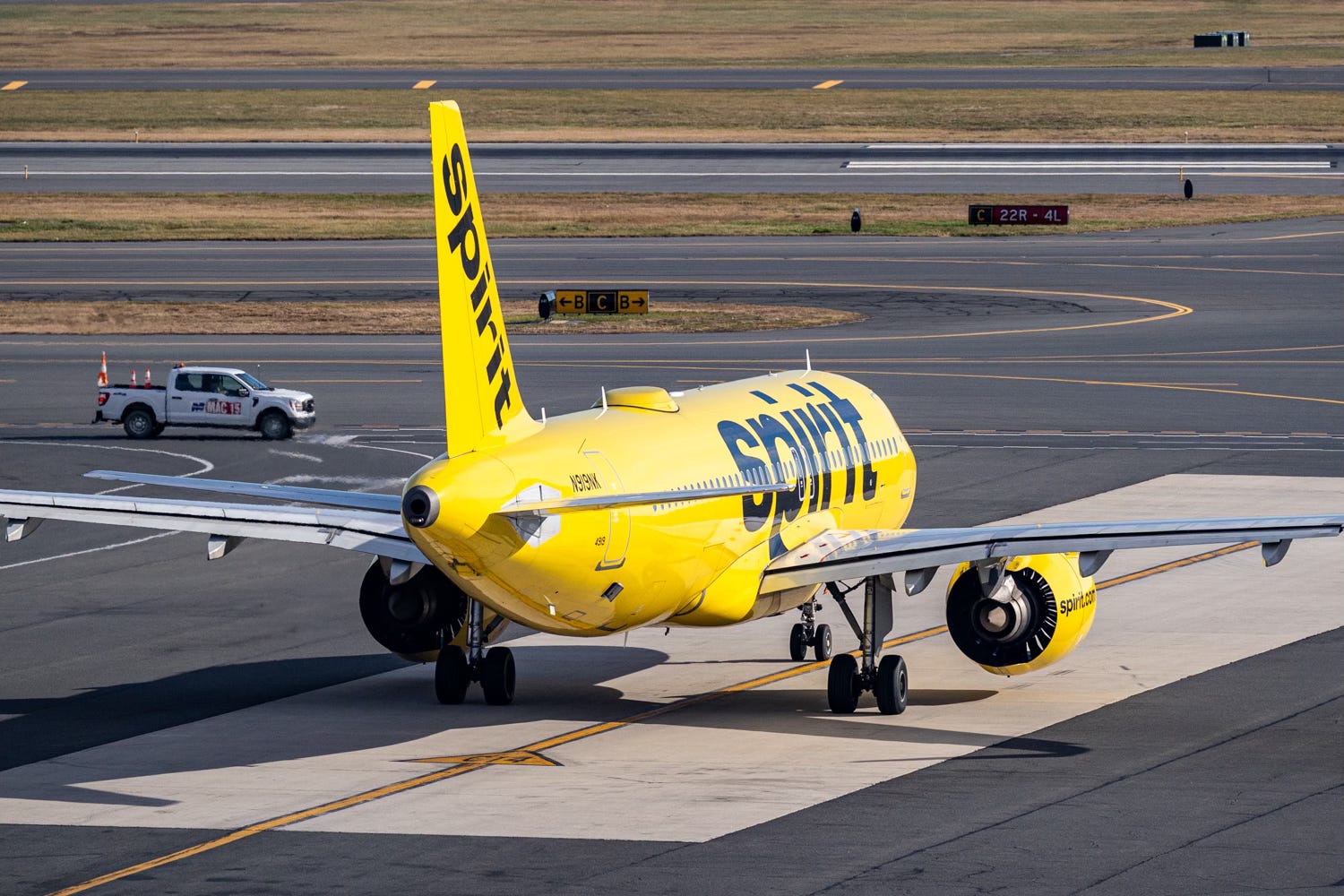
Today’s is a quick post about Spirit’s collapse. Plenty has been written already, including by me. But it’s worth taking another moment to recognize that more than 9,000 employees lost their jobs (and another 8,000 contractors are impacted between lost work hours and lost jobs as well).
It’s also worth taking a moment to note that this was basically inevitable at this point. Spirit was already a deeply diminished airline coming out of its second bankruptcy, and was no longer the sprawling competitive carrier it once was. Over the past six years it suffered from a perfect storm between debt, fleet problems, costs, and competition that figured out how to harness the “basic economy” sales pitch, combined with tempting loyalty programs, to pull Spirit passengers away. Here’s a concise X/Twitter post on the factors.
Fuel prices were the final nail in the coffin. Spirit may have limped along and made it back to a slightly profitable era if jet fuel had stayed relatively cheap, but it wouldn’t have been the same airline, and it still may have gone under. Remember, there were concerns about Spirit collapsing around the holidays, before the war in Iran set prices soaring.

One comment I keep seeing on X/Twitter is that Spirit, and everything that goes along with it, would have been saved if the merger with JetBlue had been allowed to proceed. I feel it’s worth pointing out, again, that that’s not exactly the case.
JetBlue planned to absorb Spirit. We call it a “merger” but it was really more of an acquisition. Spirit’s planes would have been retrofitted and repainted, Spirit employees would have been transitioned to JetBlue, and Spirit would have gone away as an airline. In its place, we’d have a JetBlue that was twice as big, and therefore more effectively competitive against the top four U.S. airlines — American, Delta, United, and Southwest. But that entity would be competing as JetBlue, not as Spirit, and its fares would have been higher than the basic Spirit fares, as executives acknowledged during the antitrust trial.
So Spirit — and its fares — would have been gone. That said, many (though not all) Spirit employees would still have jobs, just under JetBlue. And Spirit shareholders would have made out well.
Of course, that’s assuming that JetBlue could have even survived the merger with Spirit. The airline would have taken on a tremendous amount of debt and had to spend a fortune integrating Spirit, and it’s very possible that JetBlue would not have been able to manage that — especially now that fuel prices are up 80%.
Regardless, Spirit is a loss for the travel world. It had a great safety record, it provided good jobs, and most of all, it made travel cheaper and more accessible over the last 20-plus years. Even if you didn’t fly on Spirit, you likely benefited from the pricing pressure it introduced into the market.
I wrote an obituary to the airline over at The Points Guy which you can check out. If you want a more technical look at factors like capacity and demand, I highly recommend William Swelbar’s piece on Substack (this quote is particular on-point: “STOP BLAMING SPIRIT’S DEMISE ON THE FAILED MERGER WITH JETBLUE - IT IS A BLESSING THAT JETBLUE IS STILL HERE”.

For now, all I’ll say is that whatever your views on the situation, whether you loved it or hated it: Spirit, this one’s for you.
Nice eulogy, David.